
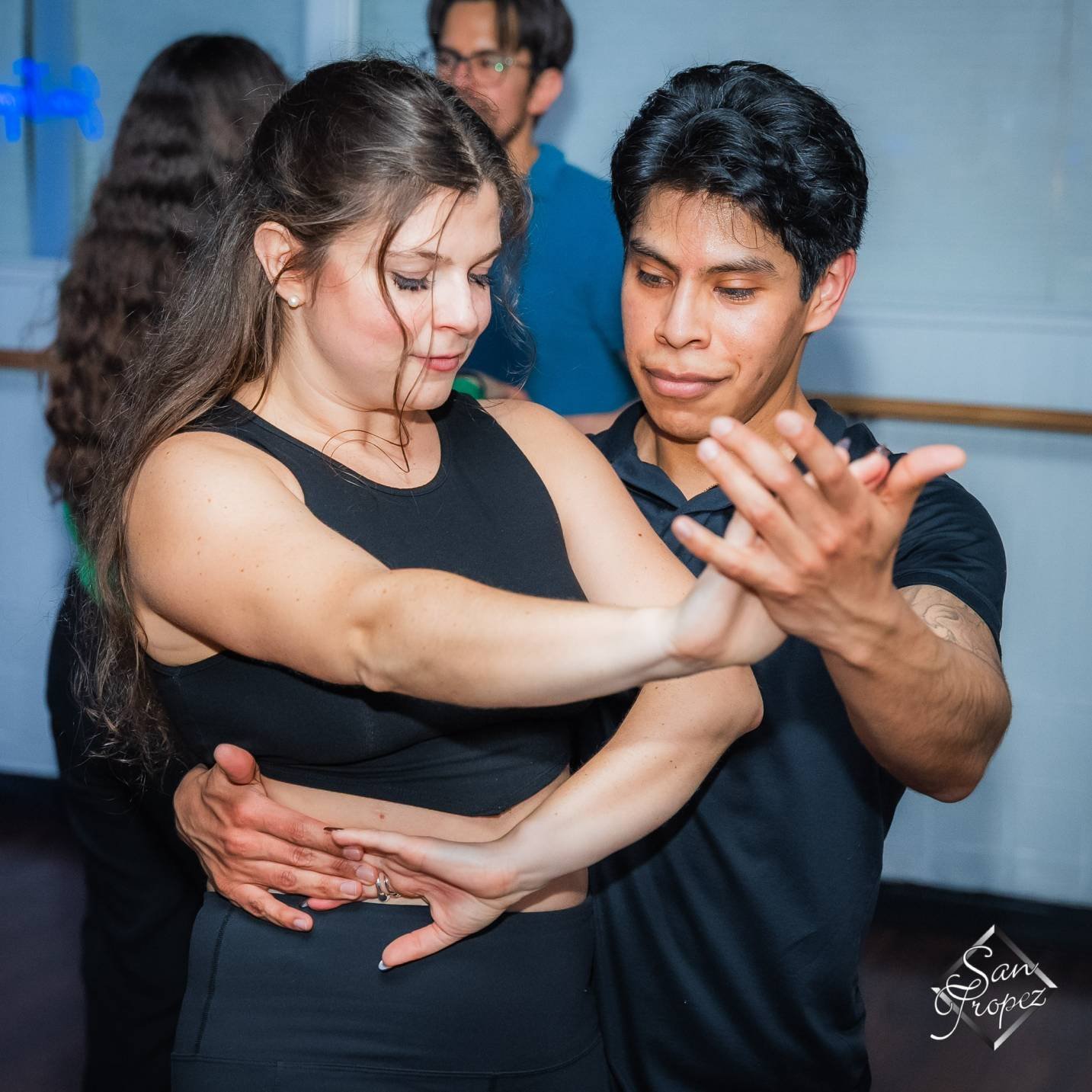
When the “beat” becomes a trap
Staying on time is important. But musical dancers learn to hear much more than the beat—and that changes everything.
You know how to find the beat. You know your basic steps. You’re dancing on time.
So why do some parts of the song still feel awkward, like you’ve messed up? What do you do when the music shifts and you’re right in the middle of a bar?
Think about your favourite Salsa or Bachata song. Doesn’t it often start softly and gradually build? The singer may pause. An instrument may suddenly disappear. The percussion may get stronger. A chorus may arrive with more intensity.
Those changes are invitations to do something different with your dancing—and you don’t need a complicated pattern to respond to them.
What musicality actually means
This is part of what dancers mean when they talk about musicality. Musicality is not simply the ability to stay on beat. It is the ability to notice what is happening in the music and let that information influence your timing, energy, movement quality and choices.
That can be especially important in social dancing. If your whole attention is locked onto counting 1-2-3… 5-6-7 or repeating the same basic at the same size and energy, you may technically be “on time” while still feeling disconnected from the song.
Listen for three layers
This is the steady beat that keeps your timing grounded.
Notice when verses, choruses, phrases, breaks and transitions begin and end.
Is the song calm, playful, romantic, sharp, dramatic or explosive? Your movement can reflect that mood without changing the step itself.
A musicality exercise for this week
Choose one Salsa or Bachata song you already love. Then try this simple three-pass exercise:
This is a powerful exercise because it removes the pressure to remember combinations. You can focus on listening instead of searching your memory for the next move.
Leaders can practise changing the energy of a simple lead while keeping it clear. Followers can practise staying responsive instead of anticipating. Both partners can discover how much expression is possible before a complicated pattern is ever needed.
